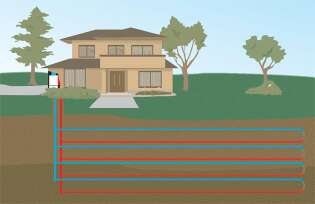
 Ground source heat pumps (GSHPs) are electrically powered systems that tap the stored energy of the greatest solar collector in existence: the earth. These systems use the earth's relatively constant temperature to provide heating, cooling, and hot water for homes and commercial buildings.Reduce heating costs by up to 80% and save about 5% to 8% in total operating costs. Or a homeowner installs a geothermal heat pump and for her investment she gets low operating and maintenance costs and usually the lowest life-cycle costs. The heat pump may cost $15 per month more in mortgage payments, but it may save $30 per month on the electric bill. And you help reduce the environmental pollution that comes with traditional power generation.  |
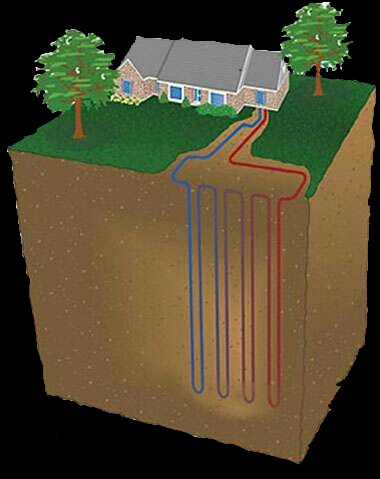 Many of the benefits provided for you are also advantageous for our planet. No chimney, flames, smoke, hydrocarbons, carbon monoxide or potentially dangerous explosive fossil fuels. Harvard has linked the increased health risk of airborne pollutants to higher mortality and lung dysfunction in children and other susceptible people. US Departmentof Energy endorses the Geo-Systems for a cleaner, healthier environment to help reduce your carbon footprint, urban smog and acid rain, global warming and save electricity. Even the smallest installed system is equal to planting an Acre of Trees or removing 2 cars from the road. It's a fact 100,000 installations will save 37,500,000,000 BTU's of energy and $750,000,000 in heating, cooling and hot water costs plus reduce pollutants by 2,160,000 tons over the 30 year equipment lifespan . |
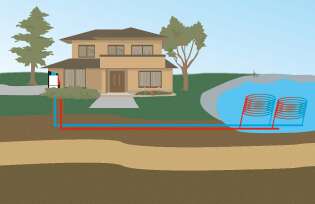 How do ground source heat pumps work? Ground source heat pumps (GSHPs) are electrically powered systems that use the earth's fairly constant temp. Heat pumps have closed loops that can be installed either horizontally, vertically, or in a pond/lake. The available land areas and the soil and rock type at the installation site will help determine the most economical choice (system type) for installation of the ground loop. An Antifreeze solution is circulated through plastic pipes buried beneath the ground for closed loop systems. The fluid gathers heat from the earth and circulates it through the system and into the building. During the summer, the system reverses itself and pulls heat from the structure and places it in the ground. This process creates free hot water in the summer and produces a considerable savings on hot water in the winter. |
